Cataract surgery
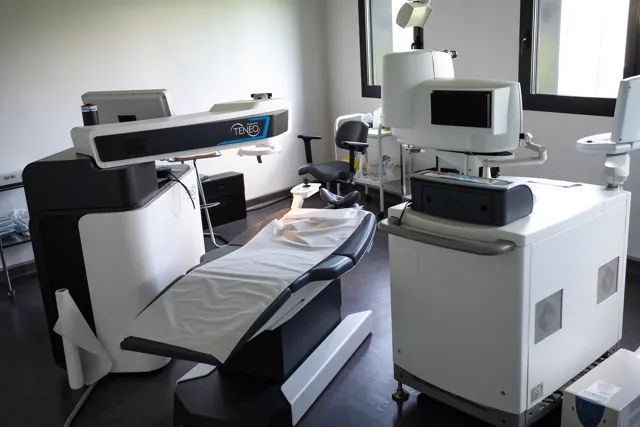
A cataract is the gradual clouding of the crystalline lens, the natural lens inside your eye. It worsens vision, causes glare and makes colours look dull. Eye drops cannot clear a cataract. Surgery is the only treatment. It involves removing the cloudy lens and replacing it with an implant. At the centre, Dr Florian Baudin performs this operation.
When is surgery needed?
In most cases, there is no medical urgency. The decision depends on how much the cataract affects you, for example if you struggle to read, experience glare when driving at night or notice reduced contrast. Your ophthalmologist first checks for other causes of reduced vision, such as problems with the retina or optic nerve. Some cataracts are operated on earlier because they make it difficult to monitor another eye condition.
The operation
The operation is a day procedure under local anaesthetic eye drops and usually takes about fifteen minutes. The surgeon makes an incision a few millimetres wide, breaks up the natural lens using ultrasound (phacoemulsification), removes it by suction and then inserts the implant into the capsule that held the lens. The eyes are operated on on different dates.
Choosing your lens implant
The power of the implant is calculated from measurements of your eye, including those taken with the IOLMaster 700 biometer. This step determines what your vision will be like after surgery.
| Type of implant | What it provides | Limitations |
|---|---|---|
| Monofocal | Clear vision at one distance, usually far away. Reading glasses are needed | Covered by the French statutory health insurance scheme (Assurance Maladie) |
| Toric | Also corrects astigmatism | Requires precise positioning |
| Premium (extended depth of focus, multifocal) | Distance and near vision, sometimes intermediate vision | Possible halos, sometimes reduced contrast, extra charge shown on the quote (devis) |
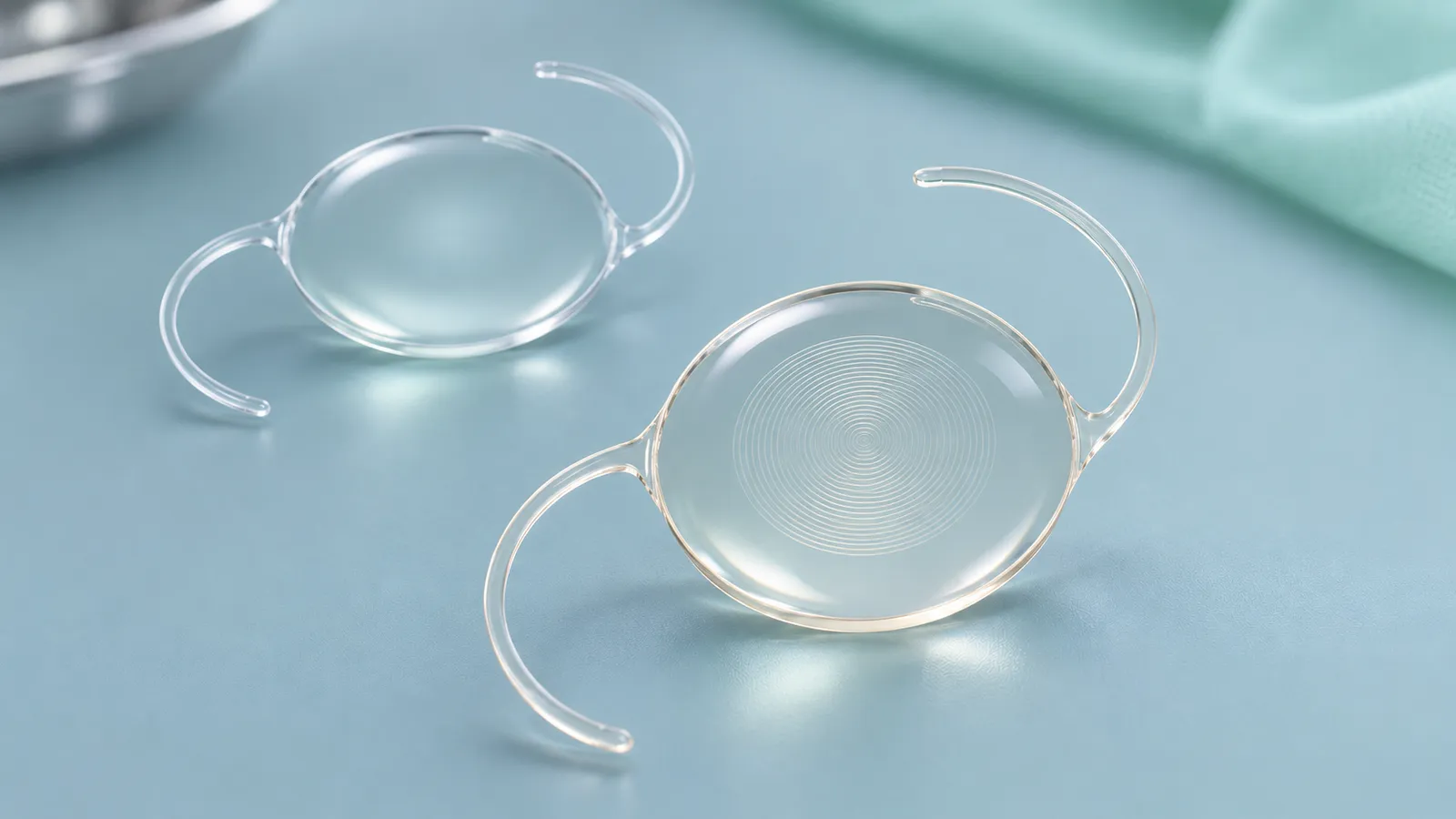
Dr Baudin fits many premium implants. An EDOF implant (extended depth of focus) increases the range over which you see clearly. It gives good distance and intermediate vision, such as for screens or a dashboard, with few halos, although you will often still need glasses for fine print. A multifocal implant splits light between different focal points (distance, intermediate and near), with the aim of helping you manage without glasses in most situations. You may see halos at night and take a few weeks to adjust.
At the assessment, describe what you do in a typical day, whether you use screens, read, drive at night or garden. These activities matter much more for the choice than the implant’s technical specifications. Near vision after 45
After the operation
You will put in antibiotic and anti-inflammatory eye drops yourself for a few weeks, as prescribed. Vision improves within a few days, though it takes longer to settle. Avoid strenuous activity, swimming pools and eye make-up for as long as your surgeon advises. Glasses are prescribed once your vision is stable.
Inflammatory macular oedema (Irvine-Gass syndrome)
A few weeks after surgery, inflammation can cause the macula, the central part of the retina, to swell. This is inflammatory macular oedema, also called Irvine-Gass syndrome. It can be detected on an OCT scan. When it occurs, vision stops improving or gets slightly worse, with blurring in the centre. It is frequently seen on OCT but is benign in the vast majority of cases. It causes symptoms in only a minority of patients and usually resolves with anti-inflammatory eye drops, sometimes over an extended course. This is one reason for follow-up checks a few weeks after surgery.
Risks and warning signs
Serious complications are rare. Infection inside the eye (endophthalmitis) is of greatest concern. Report any red, painful eye or sudden drop in vision in the days after surgery straight away, without waiting for your appointment. Secondary clouding is more common and is benign. The membrane that supports the implant can become cloudy months or years later. The clouding can be treated with a laser in a few minutes.
The centre · Treatment techniques · Contact details
The lens can also be replaced before any cataract develops, to correct presbyopia or high hyperopia: this is PRELEX.
General information. An assessment is the only way to determine whether surgery is suitable and provide you with a quote. The location of your surgery is given in your appointment notice.