Long-sightedness and close work: describing your symptoms
Long-sightedness (hyperopia) is often associated with difficulty seeing up close. A young person with hyperopia can often see clearly both far away and up close by focusing constantly. This effort can cause tired eyes, headaches or blurred vision towards the end of the day, especially when reading or using a screen. Describing your symptoms helps your ophthalmologist measure your full hyperopia, which is often stronger than it seems.

Why a long-sighted eye works harder
A long-sighted eye is slightly too short or has too little focusing power. When relaxed, the image forms behind the retina. To bring it into focus on the retina, the eye uses the same mechanism as when reading up close. The natural lens becomes rounder in a process called accommodation. Young adults have plenty of focusing power in reserve and can often compensate for all of their hyperopia. They see clearly, but the effort is continuous.
There are two ways in which hyperopia is measured.
- Manifest hyperopia is what can be measured without eye drops.
- Latent hyperopia is masked by accommodation and only appears after the use of drops that temporarily stop the eye focusing.
Together they make up total hyperopia. As you get older, your focusing reserve declines and latent hyperopia becomes apparent. It can feel as though long-sightedness has appeared at 35 or 40, although it was there all along.

Symptoms to describe at your consultation
Undercorrected hyperopia rarely causes marked blurring. Look out for the following symptoms.
| Symptom | Example of what you might say |
|---|---|
| Eye strain when working up close | “My eyes feel heavy after an hour of reading” |
| Headaches | “Across my forehead or behind my eyes at the end of the day, especially after using screens” |
| Vision that sometimes blurs | “Lines start to look double and then clear when I blink” |
| Discomfort that worsens in the evening or in dim light | “I can read well in the morning but struggle more at night” |
| Needing to hold text further away at a younger age than people around you | “I was already holding my phone further away at 38” |
| Light sensitivity and stinging eyes | Often associated with focusing effort and dry eye |
Mention your usual working distances as well, including for screens, reading, manual work and looking at the dashboard. Screen eye strain: what to tell your surgeon
Why eye drops are used at the assessment
Refraction under cycloplegia uses drops that temporarily stop the eye from focusing and dilate the pupil. The test can help measure long-sightedness more accurately. It is not routinely required and can be carried out at the first consultation or at a later appointment. Near vision remains blurred and light may dazzle you for several hours, so bring someone with you.
Why presbyopia is felt earlier with hyperopia
Someone with hyperopia already uses accommodation to see into the distance. When presbyopia reduces that focusing ability, less is left for close work. People with hyperopia therefore tend to notice presbyopia earlier and more strongly than people who have never needed a prescription, sometimes as early as their late thirties. Near vision after 45

Correction options
| Option | Who it suits | What to know |
|---|---|---|
| Glasses with the right prescription | All situations | A full correction may take a few days to get used to as the eye learns to relax its focusing effort |
| Contact lenses | For freedom of movement | Single-vision lenses are available, as are multifocal lenses after 40 |
| LASIK for hyperopia | Mild to moderate, stable hyperopia with a suitable cornea | The laser steepens the centre of the cornea. The correction takes a little longer to settle than it does for myopia |
| PresbyLASIK | Hyperopia with presbyopia and no significant cataract | Addresses both distance and near vision, with a trade-off |
| Refractive lens exchange (PRELEX) | Stronger hyperopia, usually after 55 to 60 | The implant corrects hyperopia and presbyopia. It also removes the need for cataract surgery later |
LASIK · PresbyLASIK · Refractive lens exchange, on annecy-ophtalmo.fr
Why the eye’s drainage angle matters
A long-sighted eye is shorter, so the space through which fluid drains, called the iridocorneal angle, is often narrower. As the natural lens thickens with age, the angle can suddenly close, causing acute angle-closure glaucoma. A very painful red eye, blurred vision, coloured halos and sometimes nausea are warning signs. This is an emergency. The assessment for hyperopia includes checking the drainage angle. Types of glaucoma, on annecy-ophtalmo.fr
In summary. Hyperopia mainly causes eye strain and headaches during close work because the eye works harder to focus. Refraction under cycloplegia can help measure long-sightedness more accurately. It is not routinely required and can be carried out at the first consultation or at a later appointment. People with hyperopia notice presbyopia earlier, and their drainage angle needs attention.
Frequently asked questions
Why do my new glasses tire my eyes at first?
Your eye was used to working hard to focus. It can take a few days for it to relax with the new correction.
Are my children more likely to be long-sighted?
Hyperopia is common in young children and often decreases as they grow. High hyperopia, or hyperopia that differs between the eyes, needs early correction as it can lead to amblyopia or a squint.
Does laser surgery correct hyperopia as well as myopia?
Results for mild to moderate hyperopia are good, but the correction takes a little longer to settle and fewer cases are suitable than for myopia. With stronger hyperopia, surgery on the natural lens is often discussed.
Check your eligibility or book an appointment to discuss your symptoms with a surgeon.
Sources
Related reading
All news
News
Who assesses fitness for jobs with eyesight standards?
For some jobs, eyesight is part of the fitness requirements. Pilots, air traffic controllers, professional drivers, military personnel, firefighters and police officers…
27 August 2026

News
Our surgeons at the ESCRS 2025 world congress
Dr Béchet, Dr Chaise and Dr Baudin are attending the 43rd congress of the European Society of Cataract and Refractive Surgeons (ESCRS)…
7 September 2025
News
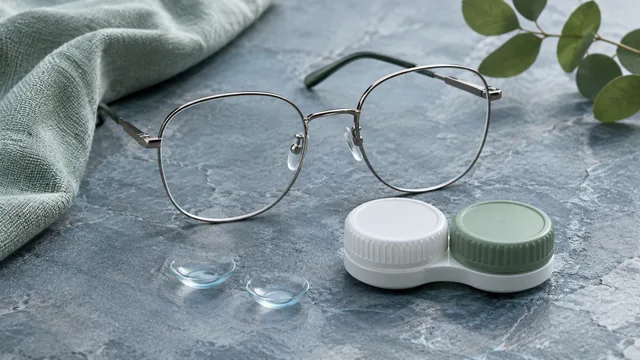
Soft contact lenses, rigid contact lenses and glasses
Glasses or contact lenses? The answer depends on your prescription, your activities and what your eyes can tolerate. Knowing the advantages and…
11 May 2026
Have a question about your situation?
An assessment tells you what is and isn’t possible and allows you to get a quote.