Phakic implants
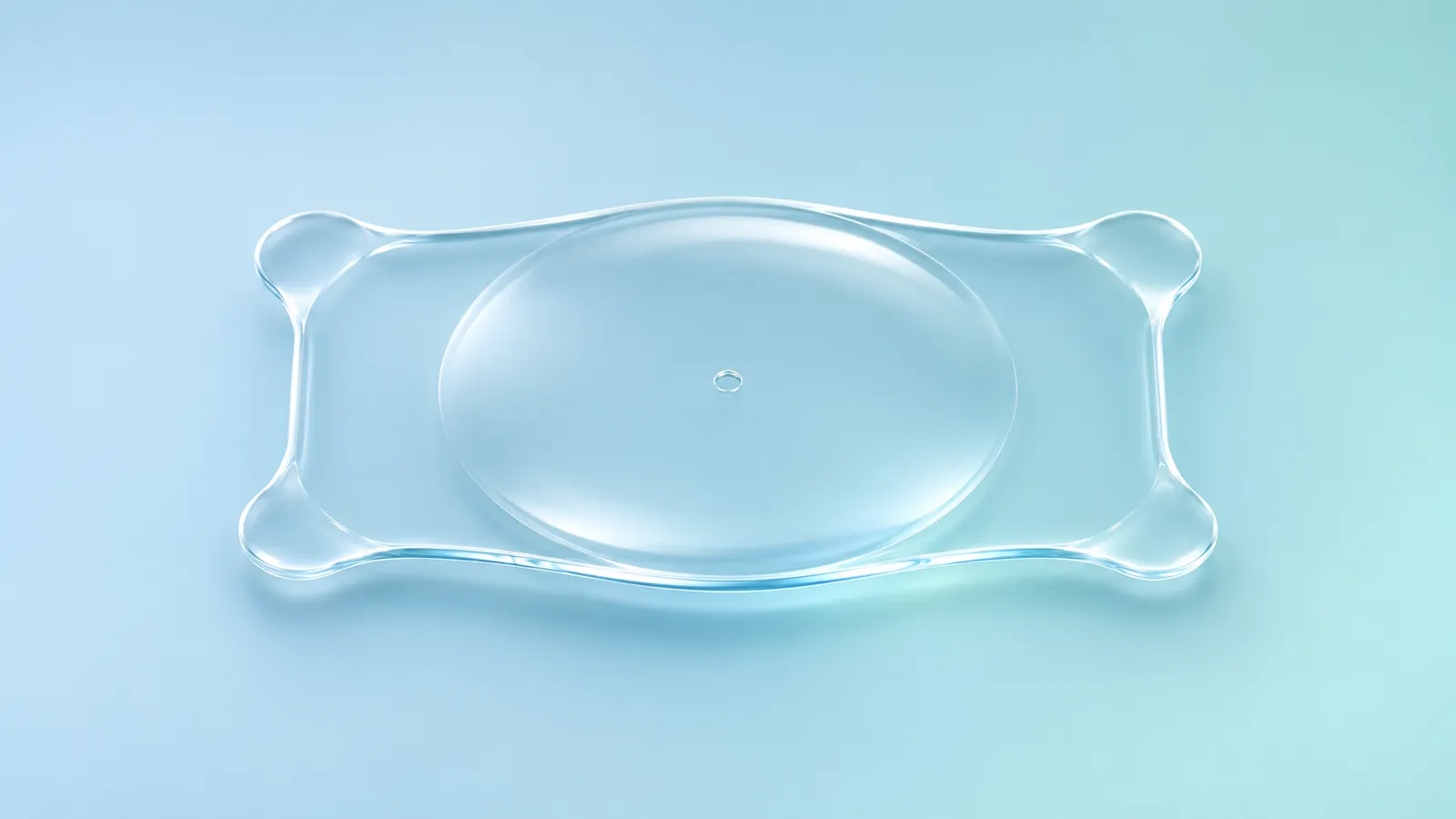
For high myopia, laser treatment reaches its limits: correcting −10 dioptres would require removing too much corneal tissue. A phakic implant is a lens placed inside the eye, in front of the natural lens, which stays in place. The implant can be removed, and the procedure does not reshape the cornea. At the centre, Dr Florian Baudin fits phakic implants.
Book an appointment online
Doctolib · Refractive surgery, first consultation
Call the officeOnline booking is in French. Reception answers the phone.
Who might be suitable?
- high myopia, beyond what can be treated given the thickness of the cornea
- a thin cornea or a corneal shape that raises concern, either of which rules out laser treatment;
- significant long-sightedness (hyperopia)
- associated astigmatism, which can be treated with toric implants.
The most commonly used model, the ICL, is a flexible collamer lens placed behind the iris. It is generally intended for adults with a stable prescription. Measurements taken during the assessment
What the assessment measures
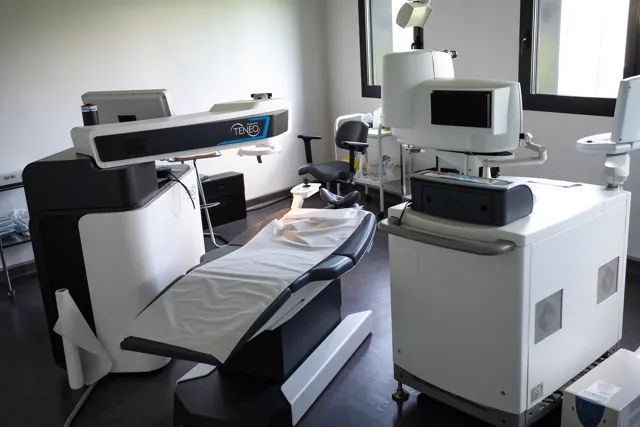
The implant fits into a small space, so the assessment needs to be precise. It includes measuring the depth of the anterior chamber, counting the cells on the inner surface of the cornea (endothelium), measuring the diameter of the eye and the iridocorneal angle, and examining the back of the eye, as the retina is more fragile in people with high myopia. The centre uses equipment including the ANTERION tomographer and a Nidek specular microscope for these measurements. Our equipment
After the operation
Both eyes are operated on the same day. Regular follow-up, usually once a year, checks your vision, the pressure inside your eye, the space between the implant and the natural lens, and the cell count. The implant is invisible. If a cataract develops years later, the implant is removed during cataract surgery.
Risks
As with any surgery inside the eye, risks include infection, raised eye pressure, early cataract, faster-than-expected loss of endothelial cells and halos at night. These are rare and are checked for during follow-up. If you experience pain or a sudden drop in vision, call the centre straight away.
Alternatives
Options include glasses, contact lenses, laser treatment (LASIK, PRK (PKR)) if your cornea is suitable, or refractive lens exchange (PRELEX) in some cases, performed by the same surgeon.
Prepare for your assessment · Care pathway and follow-up · Appointments
General information. An assessment is the only way to determine whether surgery is suitable and provide you with a quote (devis).
References
- EyeWiki (American Academy of Ophthalmology), Implantable Collamer Lens
- Société française d'ophtalmologie, patient information leaflets
- Annecy Ophtalmo, the ICL phakic implant
Book an appointment online
Doctolib · Refractive surgery, first consultation
Call the officeOnline booking is in French. Reception answers the phone.