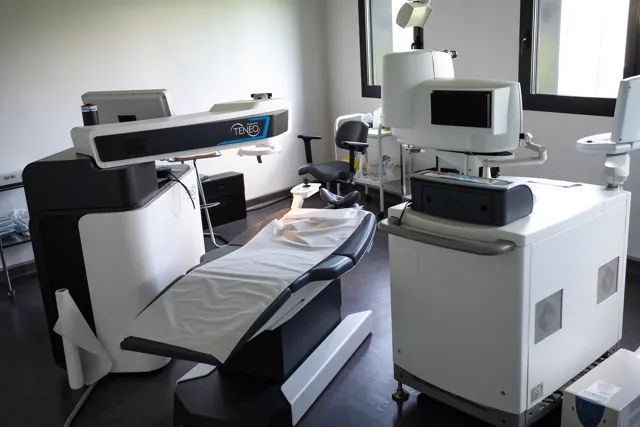
Contact lenses: what to tell your surgeon at the assessment
If you wear contact lenses, the main thing to do before a refractive surgery assessment is to stop wearing them in good time. At the centre, you must stop wearing soft contact lenses at least one week before measurements and rigid lenses at least three weeks before. Here is why, how to plan for the break and what to tell your surgeon.
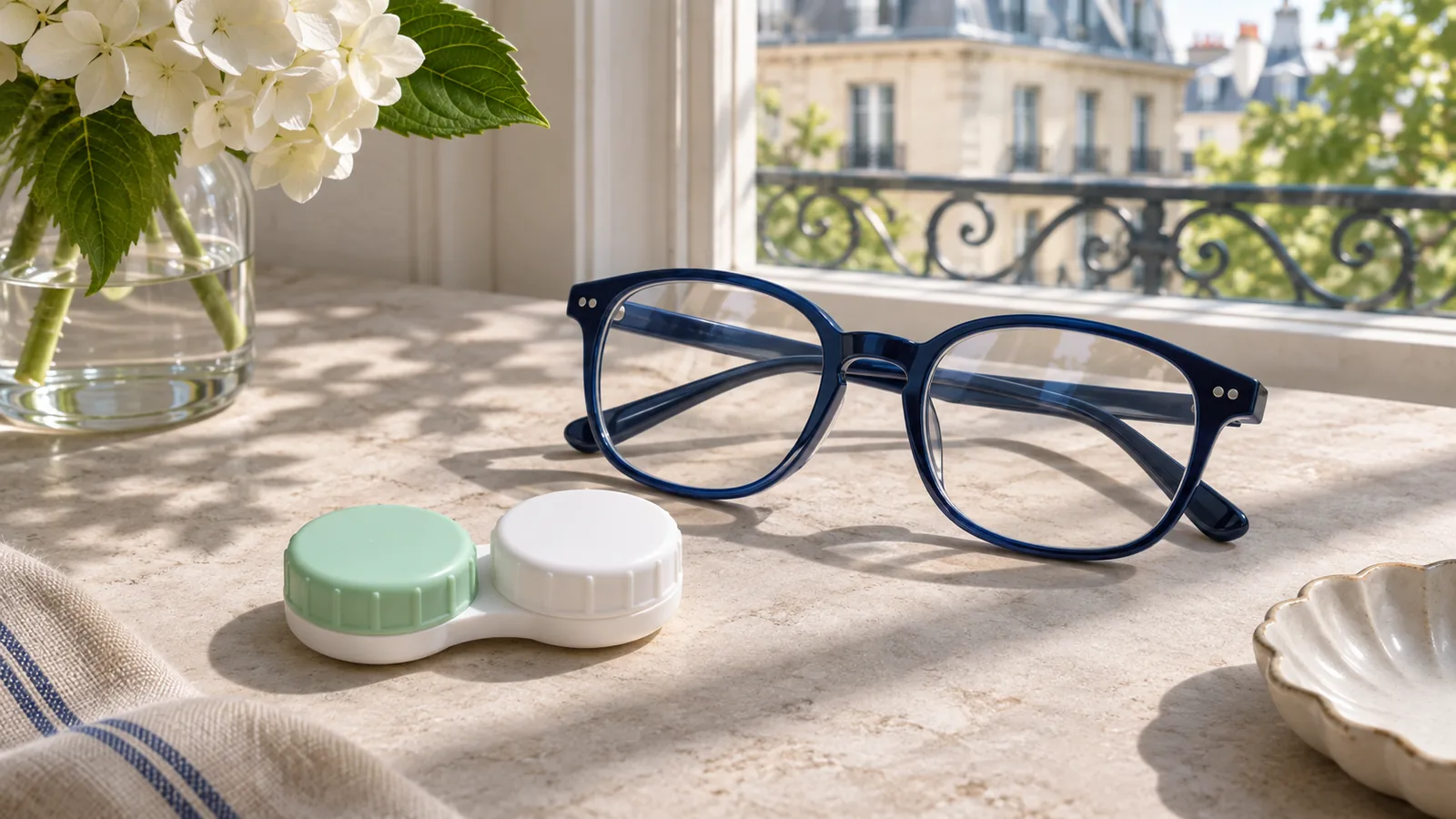
Why do I need a break from contact lenses?
A contact lens sits directly on the cornea. Even when it fits perfectly, it puts slight pressure on the surface and changes how much oxygen reaches it. Over months, the cornea may change shape a little. This is known as corneal warpage. It is reversible and is not serious in itself, but it can affect the assessment. Topography would measure the temporarily altered cornea and the laser treatment would be planned using that altered shape.
This effect is more marked with rigid lenses, which rest more firmly against the cornea. That is why they require a longer break. Removing the lenses also lets the surgeon assess the eye surface without the irritation caused by contact lens wear. What does corneal topography measure?
Why clinics give different timings
You may find other timings online. For example, the US FDA recommends 2 weeks for soft lenses, 3 weeks for rigid gas-permeable lenses and 4 weeks for older hard lenses. These recommendations reflect different but compatible protocols. Your cornea needs to be stable when it is measured. Follow the instructions of the team taking your measurements.
| Contact lens type | Time without lenses before assessment at the centre |
|---|---|
| Daily, fortnightly or monthly soft lenses | At least 1 week |
| Soft toric lenses (for astigmatism) | At least 1 week, to be confirmed at your appointment |
| Rigid gas-permeable lenses | At least 3 weeks |
| Orthokeratology lenses (worn overnight) | A longer break is needed. Mention them when booking |
| Scleral lenses | Discuss with the team. These lenses are often prescribed for an irregular cornea, which affects the assessment |
If the corneal maps still look unstable on the day, your surgeon may ask to repeat the measurements a few weeks later, with your lenses still out. This is more reliable than planning treatment based on an uncertain measurement.
What information to bring
Your surgeon needs to know about your contact lens wear.
- The type and brand of your contact lenses, ideally with the box or prescription showing power, radius and diameter
- How many years you have worn them and how many hours a day you wear them
- Whether you sometimes sleep in them, which substantially increases the risk of infection
- Any episodes of eye redness or infection and any difficulty tolerating your lenses
- The exact date you stopped wearing them before the assessment
- Why you are considering surgery, such as discomfort, dry eye, sport or work requirements.
That last point matters. If you mainly want surgery because dry eye makes contact lenses hard to tolerate, assessing the eye surface becomes especially important. Why the eye surface matters at the assessment

Planning your break from contact lenses
One to three weeks in glasses can be inconvenient, particularly if they are an old pair. A few practical tips follow.
- Check beforehand that your glasses are still right for your vision, and have them adjusted if necessary.
- Avoid booking the assessment just after a ski trip or sporting event for which you were planning to wear contact lenses.
- If you have severe myopia, plan night-time driving with care, as thick glasses lenses narrow your field of view.
- Keep your lenses and case out of sight so you are less tempted to wear them for just one day.
You may be able to wear contact lenses again between the assessment and surgery. Ask the team first, as you often need another full break from lenses before the operation.
In summary. Stop wearing soft lenses at least one week before the assessment and rigid lenses at least three weeks before. Mention orthokeratology or scleral lenses when booking. Bring your contact lens box and the date you stopped wearing your lenses.
Frequently asked questions
I forgot and wore my lenses the day before. What should I do?
Tell reception before you come. The assessment will probably be rescheduled or some measurements repeated later to avoid errors in the treatment calculations.
Do daily lenses change the shape of the cornea less?
They are safer from a hygiene point of view, but they are still soft lenses that sit on the cornea. The one-week break still applies.
Can I keep wearing lenses if I decide against surgery?
Yes. The assessment is also an opportunity to check that the lenses fit properly and that you tolerate them well. Contact lens care, on annecy-ophtalmo.fr
To plan your assessment, contact reception and check which documents to bring.
Sources
Related reading
All news
News
How to read patient satisfaction survey results
In October 2025, 188 people who had surgery at Annecy Laser Vision answered our satisfaction survey, and 94.3 % said they were…
19 November 2025
News
ELITA and TENEO 2: two lasers used in eye surgery
Since 2026, the laser theatre at Annecy Laser Vision in Argonay has had two devices: the Johnson & Johnson Vision ELITA femtosecond…
29 January 2026

News
Near vision after 45: what questions should you ask?
Holding the menu further away, stretching out your arm to see your phone or needing bright light to read a medicine leaflet…
3 April 2026
Have a question about your situation?
An assessment tells you what is and isn’t possible and allows you to get a quote.